
The Ultimate Guide for Busy Mums
As busy mums, we often fall into the trap of doing everything ourselves because it’s faster. But research (and countless experienced mums!) shows that assigning age-appropriate chores is one of the most powerful things you can do for your child’s self-esteem and future success.
It’s not just about a clean house; it’s about raising capable, confident adults who know they are a valuable part of the family team.
Ready to ditch the “one-mum show” and introduce a positive family responsibility routine? Here is your easy-to-read, step-by-step guide with tips and best practices from other mums!
Why Chores are the Secret Ingredient to a Great Kids Routine
Before you tackle the how, remember the why. Framing chores as “Family Contributions” or “Team Jobs” changes the entire perspective for you and your child.
| The Surprising Benefits of Chores | Expert Insight |
| Boosts Confidence | Successfully completing a task (even a small one) builds self-efficacy and a positive self-image. |
| Develops Life Skills | Teaches crucial Executive Functioning skills like planning, sequencing, focus, and time management. |
| Teaches Teamwork | Shows children they are valued members of a collective unit, fostering empathy and cooperation. |
| Reduces Nagging | Once chores are part of the daily routine (like brushing teeth), the chart becomes the reminder, not Mum! |
📅 Mom-Approved Strategies: When to Start & How to Begin
The best time to start introducing chores is yesterday, but the second-best time is right now. It is truly never too late to start!
Tip 1: Start When They are Eager Helpers (Ages 2-3)
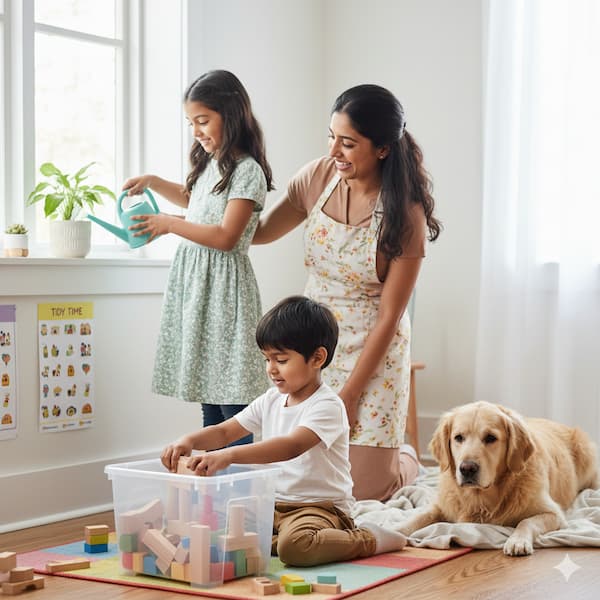
Most mums agree: the easiest time to start is when they are toddlers, because they naturally want to copy and help you. Don’t call it a chore—call it “helping.”
- Good Practice: Do the chore with them. Give them a tiny cloth while you dust, or a small toy broom while you sweep. Focus on the positive experience, not the perfect outcome.
- Mom Tip: “I started with ‘Clean Up Time’ music. When the song comes on, it’s the signal to put toys away. Now the song is a natural cue, not my voice!”
Tip 2: The Core Rule: Consistency and Visuals
Kids thrive on predictability. For any new routine to stick, you must be consistent.
- Create a Routine Slot: Assign a set time for contributions, like “After Breakfast Tidy” or “Pre-Dinner Prep.”
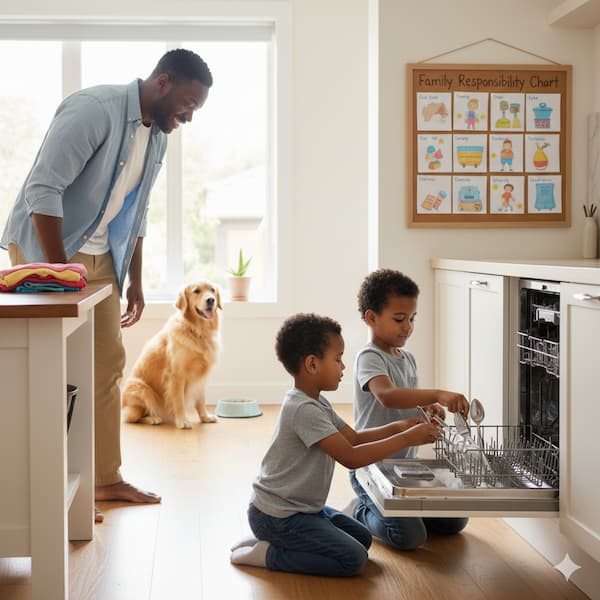
- Visual Charts are Magical: Use a chore chart for kids (magnetic, whiteboard, or printable). For pre-readers, use pictures or simple drawings for each task (e.g., a sock in the hamper). When a chore is done, the simple act of putting a sticker on the chart provides instant satisfaction and motivation.
Tip 3: Let Go of Perfectionism (A MUST)
This is the hardest part for experienced parents. The goal of early chores is training and character building, not pristine surfaces.
- Be a Teacher, Not a Cleaner: You must invest time upfront to teach the chore (show them how to fold a towel, where the bins go).
- The Gentle Correction: If a job is done poorly, avoid criticism. Use the “sandwich technique”: “Thank you for getting all the clothes in the basket (Praise). Next time, let’s make sure the socks are not sticking out so the lid closes properly (Gentle Correction). You are such a great helper (Positive Reinforcement).”
👶 Age-Appropriate Chores: What Mums Assign
Here is a quick-reference guide of realistic age-appropriate chores that mums successfully use to build responsibility:
| Age Group | Recommended Contributions | Life Skills Taught |
| Toddlers (Ages 2-4) | Put toys in a designated bin; place dirty clothes in the hamper; help wipe spills; feed pets with pre-portioned food. | Cooperation, Self-Help, Sequencing. |
| Young Children (Ages 5-7) | Make their bed (it won’t be perfect!); set the table with napkins/cutlery; bring in the mail; unpack their school bag; water small plants. | Responsibility, Motor Skills, Family Contribution. |
| School Age (Ages 8-10) | Load and unload the dishwasher (non-sharp items); fold and put away their own clean laundry; pack their own lunch; sweep small areas; help make simple snacks. | Independence, Time Management, Organisation. |
| Pre-Teens (Ages 11-13) | Clean their own room thoroughly; scrub the toilet/bathroom sink; change their bedsheets; vacuum a room; prepare a simple family meal (with supervision). | Mastery, Accountability, Budgeting (if tied to allowance). |
⭐ Best Practices: More Tips from the Mum Squad
- Involve Them in the Choice: If your child is 6 or older, hold a quick “Family Meeting” and let them choose from a list of tasks. Giving them ownership drastically reduces pushback.
- Start Small: Don’t overhaul everything at once. Introduce one new chore per week until they master it, then add another.
- Avoid Using Chores as Punishment: Chores are a contribution to the family, not a punitive measure. If they refuse, the natural consequence should be tied to a privilege (e.g., “The Wii doesn’t turn on until your homework spot is cleared up”).
- Make it Fun! Put on loud, upbeat music during “Tidy Time” or set a timer and make it a “Beat the Clock” challenge. Laughter is the fastest way to get buy-in.
- Praise the Effort: Be specific. Instead of “Good job,” try, “I love how you remembered to make your bed AND put your shoes away without me asking! That makes such a big difference.”
Remember this:
You are not raising children; you are raising future adults. Every towel they fold and every dish they scrape is a skill they will need to run their own home someday. Start today, and be patient—the reward is a capable, grateful child!