
Visual routines are a fantastic way to help younger children understand and follow daily schedules. Here are some ideas:
1. Picture Schedules:
* Simple & Direct: Use clear pictures or symbols to represent each activity (e.g., a bed for sleep, a plate for breakfast, a book for reading).
* Magnetic/Velcro: Attach pictures to a magnetic board or a surface with Velcro for easy rearrangement.
* Child-Made: Encourage your child to draw or colour their own pictures for the schedule.
2. First-Then Boards:
* Transition Tool: Show the current activity (first) and the upcoming activity (then).
* Example: First; brushing teeth, then; reading a book.
* Visual Cue: Helps children understand what comes next and reduces anxiety during transitions.
3. Time Travelers:
* Story-Based: Use small toys or figurines “travel”; through the day activities.
* Interactive: Move the toys from one location to another on a map or play mat as the day progresses.
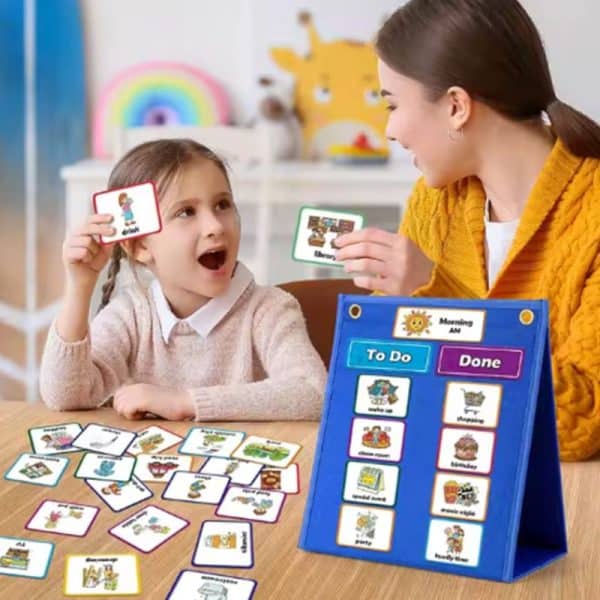
4. Picture Cards:
* Flexible: Create a set of picture cards for common activities.
* Play Games: Use the cards to play games like: “What’s Next”; or “Memory”.
Tips for Creating Effective Visual Routines:
* Keep it Simple: Start with a few core activities and gradually add more.
* Use Child-Friendly Images: Choose pictures that are easy for your child to understand.
* Be Consistent: Use the visual routine consistently to help your child learn and understand.
* Make it Fun: Incorporate games and interactive elements to keep your child engaged.
* Be Flexible: Allow for adjustments and changes to the schedule as needed.
Remember: Visual routines are a valuable tool for supporting young children’s development and independence. They can help improve communication, reduce anxiety, and foster a sense of predictability and security.
Disclaimer: This information is for general knowledge and guidance only, it is not a professional advise.