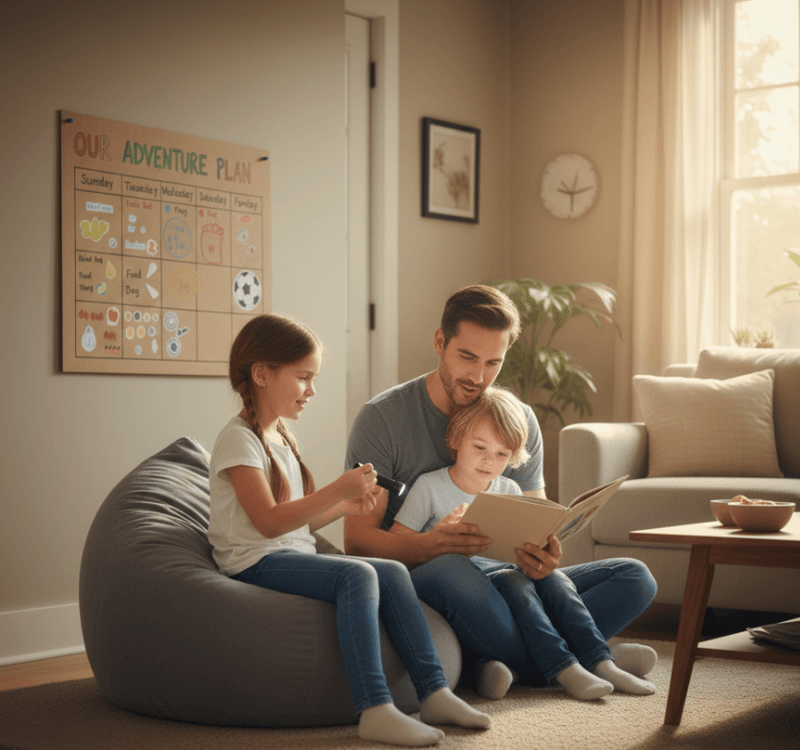
Does your morning feel like a “one-parent show” where you’re the director, the stagehand, and the person cleaning up the glitter? If you’re tired of repeating “brush your teeth” for the fourteenth time, it’s time to flip the script.
The secret to a meltdown-free house isn’t a stricter schedule—it’s ownership. When kids help “build the map,” they are far more likely to enjoy the journey. Here is how to let your kids design their own success using two powerful (and free!) tools.
1. The “Success Design” Meeting: Let Them Take the Wheel
Research shows that when children have a voice in their schedule, they feel invested rather than controlled. This transforms a routine from a set of “boring rules” into a shared family mission.
- For the Littles (The Power of Two): Avoid open-ended questions. Instead, offer structured choices. “Would you like to brush your teeth before or after putting on your pajamas?” They get the win of making a choice; you get the win of clean teeth.
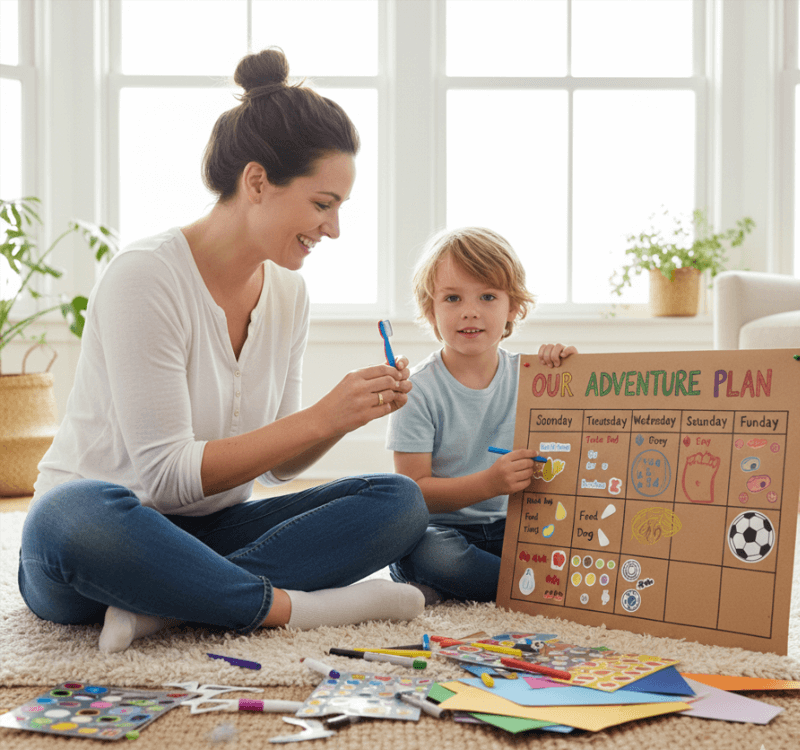
- Get Hands-On: Don’t just buy a chart—make one. Let them draw the pictures for “Breakfast” or “Shoes On.” When they physically move a magnet or a sticker on a chart they colored, they aren’t just doing a chore; they’re completing a masterpiece.
- For Older Kids: Let them write the final three tasks on their checklist. This boosts early literacy and gives them a sense of “big kid” autonomy.
2. The “Zero-Cost” Reward System
We often fall into the trap of thinking rewards need to be shiny toys or sugary treats. However, the most powerful motivator in your parenting kit is specific, descriptive praise.
Instead of a generic “Good job,” try: “I really appreciate how you lined up your shoes so neatly today. It made the hallway so easy to walk through!” This reinforces the behaviour, not just the result.
Prizes That Cost $0
To keep the motivation high without breaking the bank, try these “Natural Rewards” that kids actually crave:
- The Story Master: They get to choose all three bedtime stories.
- The 10-Minute Bonus: An extra 10 minutes of playtime or a “special chat” after the lights go out.
- Beat the Clock: Turn a routine into a game. If they finish their “Adventure Slot” cleanup early, the reward is the fun of the challenge itself!
- The “V.I.P.” Privilege: Choosing what the family listens to in the car or picking the “Family Movie Night” film.
- The “Heartfelt Pause”: Sit down for 60 seconds of undivided attention, just to say, “I am so proud of how hard you worked on this today. Watching you take charge makes me so happy.” Sometimes an honest, “grown-up” thank you is the biggest prize of all.
The Bottom Line
The goal isn’t just a clean house; it’s intrinsic motivation. By involving them in the plan and rewarding them with connection rather than “stuff,” you’re teaching them to feel proud of their own accomplishments.
When a child says, “I’ve got this!” instead of waiting for you to say “Do this now,” you’ve officially won the routine game.