
For many children—especially those with special needs, ADHD, or sensory sensitivities—the world can feel like a loud, unpredictable place. As parents, we often find ourselves repeating instructions until we’re blue in the face, which leads to “nagging fatigue” for us and frustration for them.
The secret weapon? Visual aids. By turning abstract concepts like “time” or “multi-step chores” into concrete images, we provide a roadmap that helps children feel secure, capable, and calm
1. Reduce Anxiety with Predictability
Children experience lower stress levels when they know exactly what to expect. Transitions (like stopping playtime to go to dinner) are often the biggest trigger for meltdowns because they feel sudden and forced.
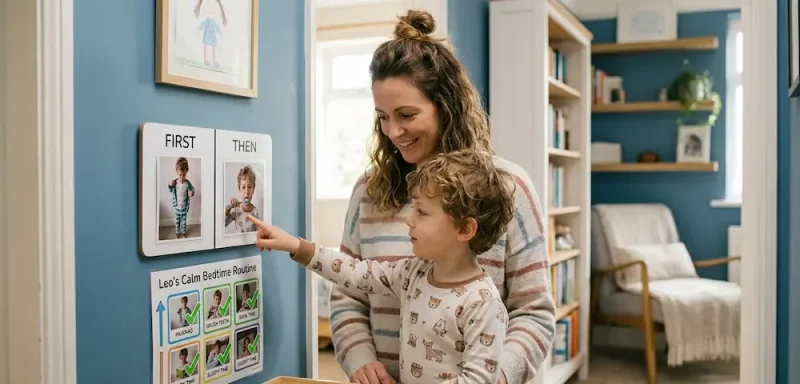
- The “First-Then” Board: This is a total game-changer for transitions. It’s a simple board with two pictures that creates a mental bridge.
- Why it works: It provides a clear light at the end of the tunnel. It’s not just about “stopping the fun”; it’s about what comes next.
2. Building Independence (and Giving Your Voice a Rest!)
We want our kids to develop Executive Functioning—skills like planning, sequencing, and focus. For a child who struggles to remember a three-step instruction, a visual checklist breaks the task down into “bite-sized” wins.
- The Morning Routine: Instead of hovering while they get ready, use a chart with icons for:
- Get dressed.
- Brush teeth.
- Put on backpack.
- The Result: Your child guides themselves. Instead of you saying “Brush your teeth!” for the fifth time, you can simply ask, “Check your chart—what’s next?”
Real Life Success: Sophie & Leo
Sophie, a busy mom of two, found that her 6-year-old son, Leo, would become completely overwhelmed by the “bedtime shuffle.” The simple instruction to “get ready for bed” often resulted in Leo wandering off or having a meltdown because he didn’t know where to start.
Sophie created a “Bedtime Path” on their hallway wall using simple printed photos of Leo actually doing each task.
Sophie’s Routine:
- Step 1: Photo of Leo putting pajamas on.
- Step 2: Photo of Leo brushing his teeth.
- Step 3: Photo of Leo picking out one book.
“It changed everything,” Sophie says. “Instead of me ‘bossing’ him around, Leo follows his path. He feels like the boss of his own evening, and I finally stopped feeling like a broken record.”
3. Positive Reinforcement
Constant verbal reminders can eventually sound like “white noise” to a child. Visual charts allow for immediate feedback and a sense of pride.
- The Power of the Tick: Placing a sticker or a checkmark on a chart provides instant satisfaction. It’s a physical representation of their hard work.
- Specific Praise: Pair the visual success with descriptive praise. Instead of “Good job,” try: “I love how you checked your list and put your toys in the bin so neatly!” This connects the behavior to the reward.
Quick Tips for Busy Parents
- Keep it Simple: You don’t need fancy software. Hand-drawn sketches or photos taken on your phone work best because they are familiar.
- Location is Key: Place your schedules at eye level where the action happens (e.g., the bathroom mirror or the fridge).
- Consistency over Perfection: It takes a few weeks to build a habit. Stick with the visual, even on “easy” days, to reinforce the routine.