
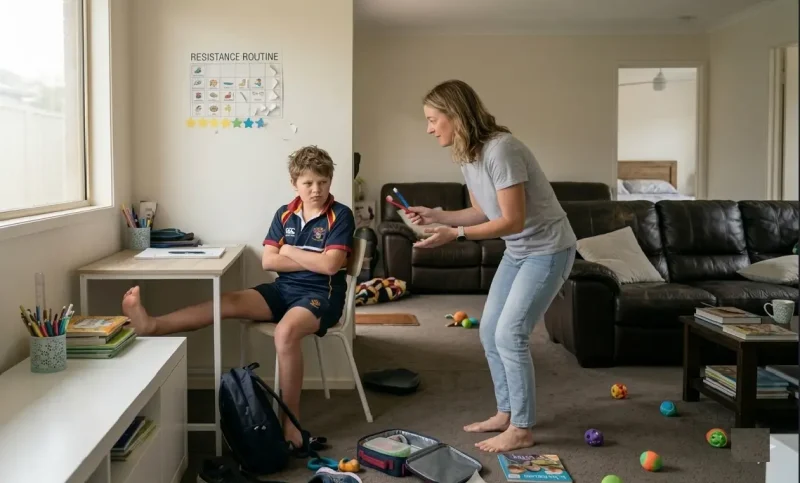
We’ve all been there: you’ve spent hours making a beautiful chart, only to have your child flat-out refuse to look at it. Resistance often happens because kids feel a loss of control or a fear of change. To turn that “one-mum show” into a team effort, we need to move away from being a “nagging” parent to being a supportive coach. By shifting the focus from “doing what you’re told” to “managing the day,” we reduce friction and build lifelong skills.
The Magic of Ownership
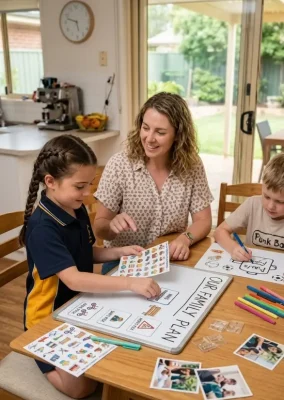
The number one way to reduce pushback is to involve your child in the planning process. When children have a voice in deciding tasks, they are more likely to feel invested and follow through. If the routine is something they helped build, they are less likely to rebel against it.
Practical Example: Hold a 10-minute “Family Meeting” on Sunday afternoon. Instead of saying, “Here is your new list,” ask, “What are the three most important things we need to do before the school bus arrives?” For a seven-year-old, this might mean letting them choose the order of activities—perhaps they prefer to get dressed before breakfast rather than after. For an older child, let them take photos of themselves doing the tasks to use as the icons on their board. When they press the “Done” button or move the magnet, they aren’t just obeying you—they are completing a plan they helped create.
Structured Choices and “The Sandwich”
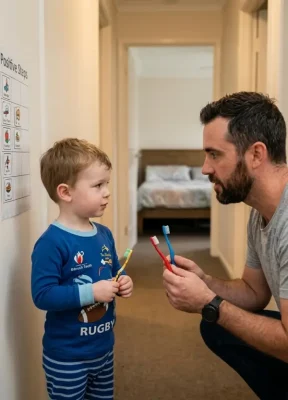
If you’re met with a “No!”, try offering structured choices within clear boundaries. This gives the child a sense of autonomy while ensuring the non-negotiable task still gets done. If a chore isn’t done perfectly, avoid the urge to criticize immediately, as this can lead to “learned helplessness” where the child stops trying altogether.
Practical Example: Instead of a command like “Go brush your teeth now,” try: “Would you like to brush your teeth before or after we put on your pajamas?” Both options lead to clean teeth, but the child feels in control of the timing. If they finish a chore like making the bed but it’s a bit messy, use the “Sandwich Technique”:
- The Bread (Praise): “I love how you remembered to pull the duvet all the way up without me asking!”
- The Filling (Correction): “Next time, let’s see if we can tuck the pillows in so they don’t slide off.”
- The Bread (Positive Reinforcement): “It makes the whole room look so much tidier. Great job!”
Incentives vs. Punishments
While you want to avoid using chores as a punishment, it is okay to use natural consequences and small rewards. The goal is to teach children that “Work comes before Play.” This isn’t a bribe; it’s a life lesson in time management and priorities.
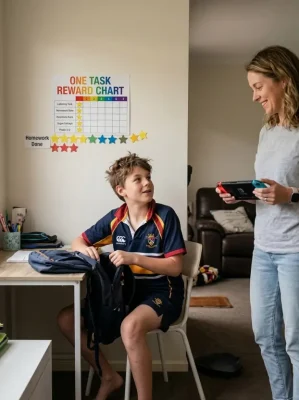
Practical Example: Use “When/Then” phrasing to set clear expectations. “When your school bag is packed and by the door, then we can head to the park.” This shifts the consequence from you being the “bad guy” to the situation itself. For a persistent struggle, like morning shoe-tying, use a “One Task Reward Chart.” Every morning they get their shoes on without a meltdown, they earn a sticker. Five stickers might equal an extra bedtime story or choosing the music in the car on the way to school. It focuses the energy on a single habit until it becomes second nature.
Troubleshooting the “Wall”
Sometimes resistance isn’t about defiance—it’s about overwhelm. If a child is staring blankly at a 10-step routine board, they might just be stuck.
Practical Example: If your child is hitting a wall, try the “Three-Minute Sprint.” Say, “Let’s see how many toys we can put in the bin before this timer goes off!” Turning a daunting routine into a game removes the emotional weight of the task. For older kids, acknowledge the effort: “I know you’re tired after soccer, let’s just do the ‘Must-Dos’ tonight and skip the rest.”
Hitting the Reset Button
Remember, things won’t always go to plan. If a day totally derails due to a fever, a rainy-day tantrum, or a last-minute practice change, don’t try to force the routine. Take a deep breath, hit the reset button, and start fresh tomorrow. Flexibility is what keeps the “predictable rhythm” from becoming a source of stress. A routine is a tool to serve your family, not a master you must obey at all costs.