
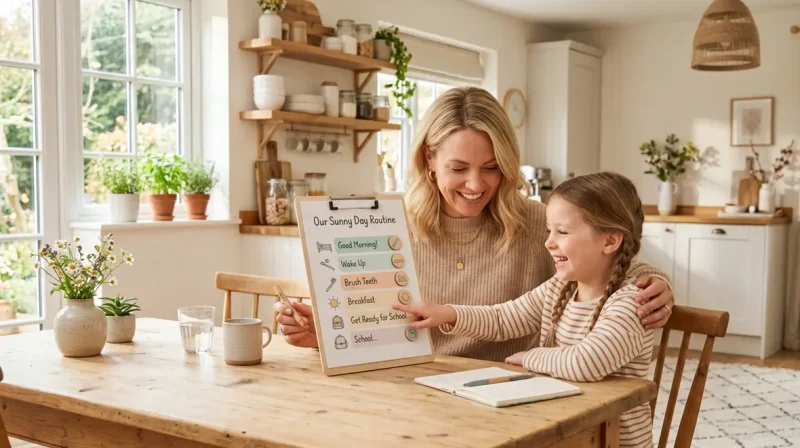
To build a peaceful household, we can learn a lot from the art of global parenting. Every culture handles daily rhythms differently, but the world’s best methods all share a common goal: replacing daily chaos with calm, predictable structures that help children feel secure and independent.
- The Global Secret: Successful routines aren’t about rigid timetables; they are about adapting to your family’s unique rhythm.
- Independence Over Structure: Many countries prioritize giving kids small, manageable tasks to build real-world confidence.
- Rest as a Routine: Embracing high-quality downtime is a cross-cultural tool for reducing daily behavior battles.
Mastering Global Parenting: The Search for a “Perfect” Routine
It is 7:15 AM. You are trying to pack a lunchbox, find a missing shoe, and nudge your child to finish their morning checklist. In the back of your mind, you might wonder: Is there an easier way to do this?
The truth is, there is no single “perfect” way to run a household. Parents all over the world—from the sunny coasts of Australia to the cozy living rooms of Denmark—face the exact same morning rush. However, how they solve it looks beautifully different.
Let’s look at five simple, stress-free routine secrets we can steal from international households.
1. Denmark: Embracing “Hygge” in Global Parenting Bedtime Rituals
In Denmark, family routines focus heavily on hygge (cozy togetherness). Instead of a frantic race to turn off the lights, the Danish bedtime routine is an intentional, warm wind-down ritual.
- The International Twist: Bedtime isn’t treated like a strict deadline; it is treated like a soft landing.
- How to implement it tonight: Dim the lights 30 minutes before bed. Put on a quiet background song and sit together. When the environment feels cozy, kids naturally transition into sleep mode without a fight.
2. Japan: The Independent “Inventory Check”
Step into a Japanese elementary school routine, and you will see something incredible: young children managing their own schedules, cleaning their classrooms, and commuting safely.
- The International Twist: Personal independence is built directly into the daily visual schedule from day one.
- How to implement it tonight: Give your child an independent “Inventory Check” list for school prep. Instead of packing their bag for them, use a simple checklist so they can pack their own water bottle and school tools.
3. France: The Structured “Boredom Gap” Approach
French parenting is famous for teaching children patience. In France, snacking is limited to one specific time in the afternoon, which creates highly predictable behavior patterns throughout the day.
- The International Twist: Kids are taught to wait comfortably, which naturally develops their ability to stay calm and focused.
- How to implement it tonight: Create a predictable 10-minute “activity sprint” when kids complain they are bored. This helps bridge the gap between school and dinner without relying on constant snacking.
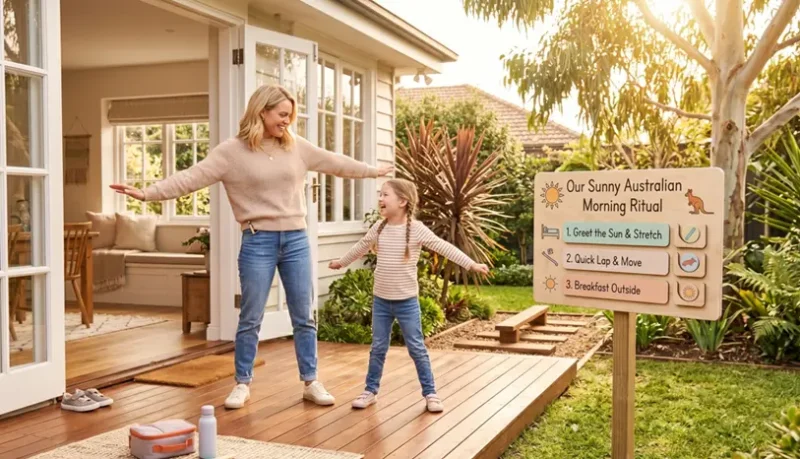
4. Australia: The Outdoor Morning Success Ritual
With beautiful weather year-round, many Australian families center their morning success rituals around the outdoors.
- The International Twist: Burning off energy early in the morning helps children stay grounded and focused when it is time to sit down for learning later.
- How to implement it today: If your morning routine feels sluggish, add a 5-minute step where your child steps outside to greet the day, stretch, or do a quick lap around the yard before school.
5. United Kingdom: Calming Audio Channels for Transitions
Many modern UK parents rely heavily on audio structures to guide kids smoothly through the trickiest parts of the day without constant parental nagging.
- The International Twist: Audio cues act as a hands-off boundary helper, telling kids exactly when an activity is starting or stopping.
- How to implement it tonight: Use a specific “Clean Up” song or a short children’s yoga audio track to cue the transition from playtime to dinner time.
Bringing Global Parenting Into Your Home Checklist
You do not have to pick just one country’s philosophy. The ultimate parenting win is picking the small pieces that fit your actual life.
Tip : Do not try to change your whole day at once. Pick just one simple global hack this week, like a simpler bedtime transition or a quick backpack check and see how your family responds.
Useful Tools for a Smoother Daily Setup
Setting up a new routine shouldn’t cause extra stress. Here are a few practical, minimalist tools that can help bring these international ideas into your home:
- Minimalist Printable Checklists: Perfect for setting up your child’s independent morning or evening track.
- Visual Countdown Timers: A fantastic, practical way to show kids how much time is left in an activity sprint.
- Screen-Sidekick Audio Channels: Curated playlists with soft cleanup songs or calming sounds to make your bedtime transition smooth.
Which country’s routine style do you think would bring the most peace to your home this week? Let’s chat in the comments!