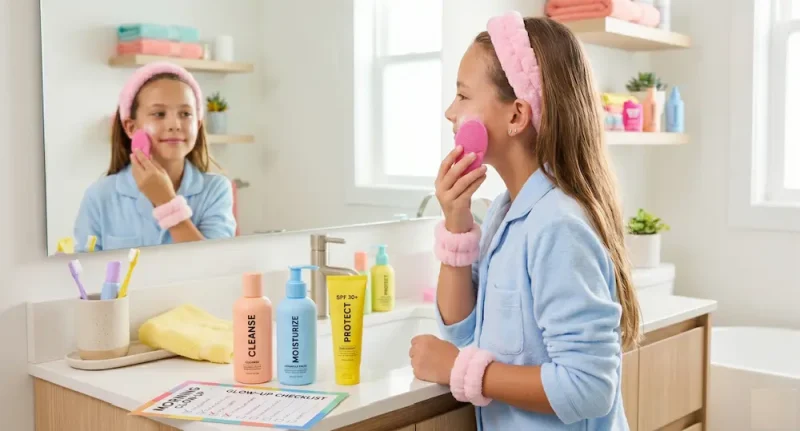
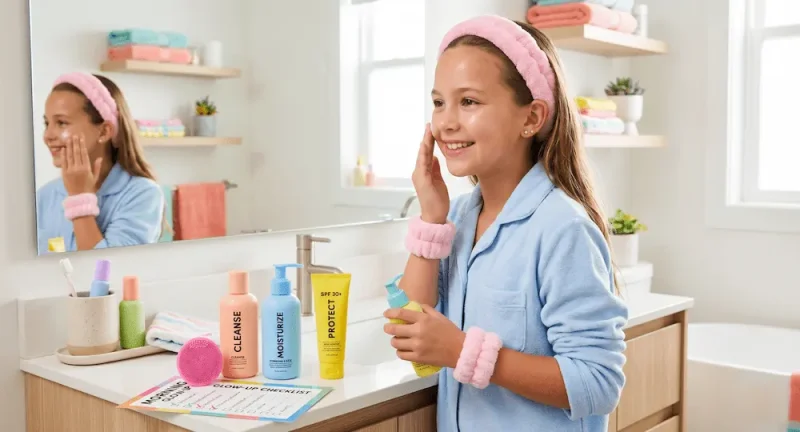
The “Sephora Kid” trend is everywhere, and let’s be honest: pre-teens are obsessed with the aesthetic of high-end skincare. While we love their enthusiasm for self-care, most pre-teen skin doesn’t need 10-step chemical peels or anti-aging serums.
This guide provides a minimalist, safe, and “cool” routine that protects their young skin barrier while letting them feel like a skincare pro.
The Quick Win
Focus on the Basics: Cleanse, Moisturize, and Protect—keep it under 5 minutes. * Skip the Actives: Avoid Retinol, Vitamin C, and harsh acids that can irritate young skin. *
Build Independence: Use a visual checklist to help them “level up” their hygiene game.
Why “Sephora Kids” Need a Routine Reset
It’s 7:00 AM. Your tween is staring at a wall of colorful bottles, trying to figure out what comes first. We get it—the packaging is pretty! But pre-teen skin is sensitive. Our goal is to replace the “product overload” chaos with a calm, predictable ritual that actually works.
The Morning “Level Up” Routine (3 Steps)
The goal for the morning is protection. We want a “shield” against the day.
1. The Gentle Splash (Cleanse)
If they didn’t get sweaty overnight, a simple splash of lukewarm water is often enough. If they prefer a product, use a fragrance-free, soap-free cleanser.
- The Goal: Refresh without stripping natural oils.
2. The Daily Shield (Moisturize)
Use a lightweight, “cloud-like” moisturizer. Look for ingredients like ceramides or hyaluronic acid—these are “safe-for-all” levels.
- KRP Tip: Keep the bottle on the bathroom counter where it’s visible.
3. The Ultimate Defense (SPF)
This is the non-negotiable step. Even on cloudy days, SPF 30+ is the most important “skin armor” they can wear.
- Make it Fun: Find a “glowy” sunscreen that gives them that Sephora-inspired finish without the harsh chemicals.
The Evening “Reset” Routine (2 Steps)
After a long day of school, sports, and screens, it’s time to clear the “debuffs” and prep for sleep.
1. The Deep Clean
If they wore SPF or a little tinted lip balm, a gentle cleanser is a must. This removes dirt and sweat that can lead to “boredom gap” breakouts.
- The Vibe: Use a soft microfiber cloth to make it feel like a spa moment.
2. The Sleep Soothe
Apply a slightly thicker layer of the same morning moisturizer. This helps the skin repair itself while they dream.
Ingredients to “Drop” (The No-Fly List)
To keep things simple and safe, avoid these ingredients until they are older:
- Retinol/Retinoids: Too strong for young skin barriers.
- Strong AHAs/BHAs: Unless prescribed by a doctor for acne, these can cause chemical burns on tweens.
- Heavy Fragrances: The leading cause of “the itchy face”.
Tools to Build the Habit
Setting up a routine is easier when you have the right gear. We’ve found these tools helpful for keeping the bathroom organized and the routine fun:
- [Visual Routine Checklist]: A printable chart they can check off each morning.
- [Silicone Face Scrubber]: A fun, tactile way to ensure they are actually cleaning their face.
- [Headband & Wristbands Set]: The “Sephora Kid” uniform—keeps water from dripping down their arms.
(Note: We provide these links as helpful resources; there is never any pressure to buy! )
Viral Tools & Safe Product Links
Building the habit is easier with the right “gear.” These resources help keep the routine fun and organized:
Bubble Skincare: Fresh Start Gel Cleanser: A viral, pH-balanced favorite that looks great on the counter.
CeraVe Daily Moisturizing Lotion: A dermatologist-approved “Daily Shield” to keep the skin barrier strong.
Pipette Mineral Sunscreen SPF 50: Non-toxic, clean, and provides defense without a greasy feel.
Visual Routine Checklist: A printable chart to help them check off tasks each morning.
Headband & Wristbands Set: The unofficial “Sephora Kid” uniform to keep water from dripping during cleansing.
Important Note: While we are experts in building routines, we are not medical professionals. Every child’s skin is unique. If your pre-teen has specific concerns like persistent acne or painful irritation, always consult with a pediatrician or board-certified dermatologist.